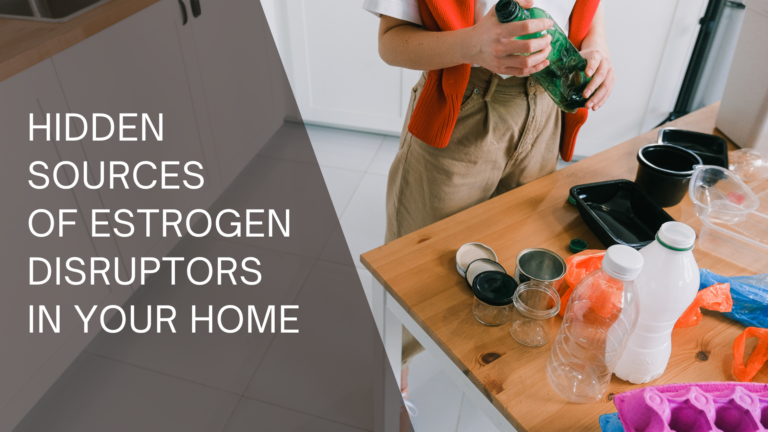
Most people who start researching estrogen dominance quickly run into a term that sounds almost science fiction: xenoestrogens. But despite the complicated name, these are very real chemicals that most of us encounter dozens of times a day without realizing it.
In our previous post, we talked about what estrogen dominance is and the physical signs to look for. Today we’re going room by room through your home to show you exactly where these estrogen-mimicking compounds are hiding and the simple, often inexpensive swaps you can make to reduce your family’s exposure starting this week.
What Are Xenoestrogens, Exactly?
The prefix “xeno” comes from the Greek word for foreign or stranger. Xenoestrogens are synthetic chemicals that enter the body and behave like estrogen – binding to estrogen receptors and triggering hormonal responses the body never intended.
Unlike the estrogen your body produces, which is tightly regulated and eventually metabolized and excreted, xenoestrogens from the environment accumulate. They come in through food, water, skin absorption, and inhalation. And here’s something important that most people don’t know: xenoestrogens absorbed through the skin are thought to be significantly more potent than those consumed through food, because they travel directly into tissues without first passing through the liver for processing.
This means that what you put on your body may matter as much as what you put in it.
Room by Room: Where Xenoestrogens Are Hiding
The Kitchen
The kitchen is one of the biggest sources of daily xenoestrogen exposure, and most of it comes down to plastic.
Plastic food storage containers and wrap. When plastic is heated in the microwave, dishwasher, or even sitting in a hot car, the chemicals in it leach into your food and drinks. This includes BPA (bisphenol A) and phthalates, both of which are well-documented estrogen mimics. “BPA-free” products are not necessarily safe either. Many manufacturers replaced BPA with similar compounds (BPS or BPF) that appear to have the same hormonal activity.
What to do: Replace plastic food storage with glass, stainless steel, or ceramic. If you use plastic wrap, never let it touch food directly, especially hot food. And stop microwaving in plastic containers entirely. Even those labeled “microwave-safe” can still leach chemicals at high temperatures.
Plastic water bottles. Refilling a disposable plastic water bottle is a common habit that significantly increases chemical exposure, as the plastic degrades with each use and washing cycle.
What to do: Switch to a stainless steel or glass water bottle that can be filled with filtered tap water.
Non-stick cookware. The coating on most non-stick pans contains perfluorooctanoic acid (PFOA) and related compounds, which are endocrine disruptors. These become especially problematic when pans are scratched or overheated.
What to do: Switch to cast iron, stainless steel, or ceramic-coated cookware. Cast iron, in particular, is inexpensive, lasts a lifetime, and adds a useful amount of iron to your food.
Conventionally raised meat and poultry. Hormones are routinely used in conventional beef and chicken production to accelerate growth. When you eat this meat, you consume residues of those hormones which behave as estrogen mimics in the body.
What to do: Choose hormone-free, organic chicken and beef when possible. Even switching just your highest-frequency proteins makes a meaningful difference.
Conventionally grown produce. Pesticide and herbicide residues on fruits and vegetables are a significant source of xenoestrogen exposure. The Environmental Working Group publishes a yearly “Dirty Dozen” list of the most heavily sprayed produce — these are the ones most worth buying organic.
What to do: Prioritize organic for the Dirty Dozen (strawberries, spinach, kale, peaches, pears, nectarines, apples, grapes, bell peppers, cherries, blueberries, and green beans are consistently on the list). The “Clean Fifteen” – items with the least pesticide residue – are generally safer to buy conventional.
Canned foods. Many food and beverage cans are still lined with epoxy resins containing BPA, which leaches into acidic foods like tomatoes especially readily.
What to do: Opt for fresh, frozen, or foods packaged in glass or BPA-free cans (brands like Eden Organics specifically use BPA-free cans for their beans).
The Bathroom
The bathroom is often the most overlooked room for xenoestrogen exposure but given how many personal care products most people use daily, and given that skin absorption bypasses the liver, it may be the most important room to address.
Shampoo, conditioner, and body wash. Many conventional formulas contain parabens (methylparaben, ethylparaben, propylparaben, butylparaben) as preservatives. Parabens are well-established xenoestrogens that have been detected in breast tissue samples in research studies. Phthalates are also common in products with synthetic fragrance.
What to do: Look for products labeled “paraben-free” and “phthalate-free.” Even better, look for short ingredient lists with recognizable ingredients. Apps like the EWG Skin Deep database let you look up specific products and see their safety ratings.
Conventional lotions and moisturizers. Many contain parabens, synthetic fragrances (which often contain hidden phthalates), and other endocrine-disrupting compounds. Because lotions are applied over large surface areas and left on the skin, absorption is significant.
What to do: Choose fragrance-free, paraben-free options, or look for moisturizers with simple ingredient lists like pure shea butter, coconut oil, and jojoba oil are excellent alternatives.
Nail polish and nail polish remover. Conventional nail polish often contains a trio of chemicals known as the “toxic trio” — toluene, dibutyl phthalate (DBP), and formaldehyde. DBP is a phthalate and a documented xenoestrogen.
What to do: Look for “5-free” or “10-free” nail polishes that exclude the most problematic chemicals. Many mainstream brands now offer these.
Synthetic fragrances — in everything. This deserves its own mention. The word “fragrance” or “parfum” on an ingredient list is essentially a legal black box — it can represent dozens of undisclosed chemicals, many of which are phthalates. This applies to perfumes, colognes, scented lotions, scented soaps, and deodorants.
What to do: Choose unscented products, or ones scented only with essential oils. This single swap can meaningfully reduce your daily phthalate load.
Sunscreen. Many chemical sunscreens contain oxybenzone (benzophenone-3), which has demonstrated estrogenic activity in studies. It’s absorbed through the skin readily and has been detected in blood, urine, and breast milk.
What to do: Choose mineral sunscreens with zinc oxide or titanium dioxide as the active ingredients instead.
The Laundry Room
Conventional laundry detergents and fabric softeners. Many contain synthetic fragrances loaded with phthalates, as well as other surfactants with hormonal activity. Because residue stays on clothing and bedding (items that are in close contact with your skin for hours) this is a meaningful source of daily exposure.
Dryer sheets. These are particularly problematic because they coat fabrics with a layer of synthetic fragrance chemicals designed to stay on the fabric, which then transfers to skin.
What to do: Switch to fragrance-free detergents, and skip fabric softener and dryer sheets entirely. White vinegar in the rinse cycle is an effective natural fabric softener. Wool dryer balls are a reusable, chemical-free alternative to dryer sheets.
The Living Room and Nursery
Flame retardants in furniture and carpeting. Sofas, mattresses, and carpeting (especially older ones) often contain polybrominated diphenyl ethers (PBDEs), which are flame retardants with endocrine-disrupting properties. They off-gas slowly into household dust and air.
What to do: When replacing furniture or mattresses, look for those certified free of flame retardant chemicals (GOTS-certified organic mattresses, for example). Vacuum with a HEPA filter frequently to reduce dust accumulation of these compounds.
Air fresheners and candles. Conventional air fresheners like sprays, plug-ins, and gel fresheners release synthetic fragrance compounds into the air you breathe continuously. Many scented candles do the same.
What to do: Open windows for ventilation, use essential oil diffusers sparingly, or simmer citrus peels and spices on the stove for natural fragrance.
The Most Impactful Swaps to Make First
If this list feels overwhelming, start here. These five changes will give you the greatest reduction in xenoestrogen exposure for the least effort and cost:
- Stop microwaving or heating food in plastic — use glass or ceramic instead
- Switch to a fragrance-free laundry detergent and eliminate dryer sheets
- Replace your most-used personal care products (shampoo, body lotion, deodorant) with paraben-free and phthalate-free alternatives
- Switch to a stainless steel or glass water bottle
- Buy hormone-free meat and organic produce for your highest-frequency meals
You don’t have to change everything at once. Every swap you make reduces your total body burden, and small consistent changes add up significantly over time.
Supporting Your Body From the Inside
Even with all the best lifestyle changes, complete avoidance of xenoestrogens in our modern world simply isn’t realistic. That’s why supporting your body’s ability to process and eliminate excess estrogen is equally important.
The liver is the primary organ responsible for metabolizing estrogen. When liver function is sluggish, which is common given the toxic load most of us carry, estrogen builds up rather than being cleared efficiently. Gut health matters too: excess estrogen is excreted through the bowel, and constipation allows it to be reabsorbed back into circulation.
Supporting these clearance pathways through diet, fiber intake, and targeted herbal support is a key part of a whole-body approach to hormone balance.
Myomin developed by Dr. Chi, helps maintain normal healthy hormane levels. Chi-F supports overall hormone balance for both men and women. For those dealing with liver stress – which often accompanies estrogen dominance – Liver Chi and Debile are formulas in the Chi line traditionally used to support healthy liver and gallbladder function.
The Bottom Line
Xenoestrogens are genuinely pervasive but they are also largely avoidable once you know where to look. The goal isn’t perfection. It’s reduction. Every swap you make lowers your daily exposure and gives your body a better chance to maintain the hormonal balance it’s designed for.
Start in one room this week. Make one swap. Then another. Your body will thank you.
Missed our first post in this series? Read What Is Estrogen Dominance? Signs You Might Have It
Want the full guide? Download our free report, Ways to Relieve the Symptoms of Endometriosis, for a deeper look at estrogen dominance and natural strategies to support your hormonal health.
Disclaimer: This article is for educational purposes only and is not intended to diagnose, treat, cure, or prevent any disease. Please consult your healthcare provider before beginning any new supplement or health protocol.